By Kelly Oney
July 28, 2026
When the fourth quarter approaches, supply chains across the globe experience an intense surge in activity. From retail distributors gearing up for holiday shopping to industrial manufacturers moving heavy yields, every logistics link operates at peak capacity. At the foundation of this movement is the humble shipping platform. Without a steady flow of load carriers, warehouses become congested, loading docks stall, and critical deliveries miss their departures. To prevent these bottlenecks, experienced pallet suppliers must prepare months in advance, designing flexible workflows that absorb sudden volume increases without sacrificing punctuality. Understanding how industry leaders navigate high-pressure periods provides valuable insight into supply chain resilience.
Anticipating Seasonal Volume Surges Early
The primary mechanism allowing shipping platform providers to handle peak demand without disruption is advanced predictive analysis. Rather than waiting for emergency orders during autumn and winter, forward-thinking pallet suppliers continuously monitor historical order patterns, economic indicators, and regional manufacturing cycles. By reviewing data from previous years, these providers accurately estimate when specific sectors will experience their sharpest volume spikes. This foresight enables them to procure necessary raw lumber and fastenings well before materials tighten and spot prices escalate.
Furthermore, proactive communication with commercial clients plays a pivotal role in this forecasting process. Account managers reach out to distribution centers early in the third quarter to establish baseline projections. By locking in projected requirements for wood pallets early, providers adjust daily schedules and build dedicated inventory buffers. This systematic approach ensures that when a client experiences an unexpected jump in outgoing shipments, the necessary platforms are already assembled, inspected, and waiting in the warehouse, eliminating lead-time anxiety for logistics managers.
Implementing Total Pallet Management Programs
During peak operational cycles, warehouse staff should focus entirely on picking orders, packing goods, and loading freight. Forcing facility personnel to sort, stack, and repair damaged platforms wastes valuable labor hours and slows throughput. To alleviate this operational burden, dependable pallet suppliers offer comprehensive total pallet management services that handle the entire platform lifecycle directly on or off the client's premises. Under these integrated agreements, the provider assumes full responsibility for maintaining an optimal flow of shipping structures.
When executing a total pallet management strategy, logistics professionals monitor daily usage rates and automatically schedule replenishments without requiring facility managers to generate continual purchase orders. This seamless approach integrates buying pallets with ongoing maintenance, ensuring clean, structurally sound units are always available at the end of the production line. By outsourcing platform inventory control to specialized professionals, distribution centers maintain peak operational velocities and reduce labor overhead during the busiest shipping weeks.
Leveraging Recycled Wood Pallets for Buffer Stock
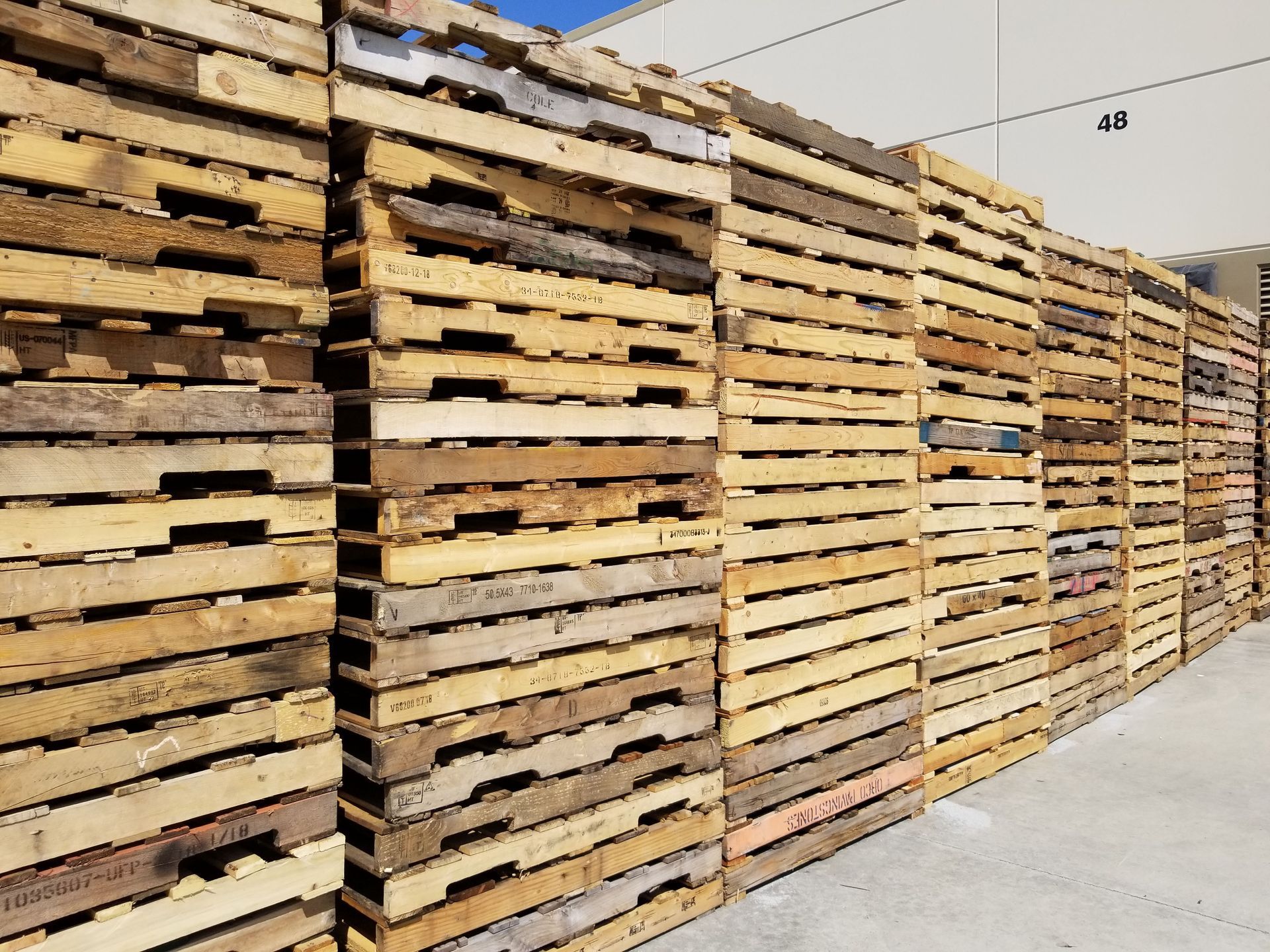
When nationwide demand reaches its zenith, relying exclusively on newly manufactured lumber can create severe supply chain bottlenecks due to timber shortages and saw-mill capacity limits. According to Forisk Analytics, US pallet production hits 600 million annually, consuming 1/3 of hardwood and 1/6 of softwood lumber boards. Because the sheer volume of raw material required to support nationwide commerce is so immense, resourceful pallet suppliers expand their reliance on recycled wood pallets to maintain uninterrupted fulfillment schedules.
By operating extensive pallet recycling services, top providers rescue millions of used platforms from distribution centers, retail backrooms, and industrial yards every year. Skilled assemblers inspect retrieved structures, replacing broken deck boards and damaged stringers with reclaimed timber to restore load-bearing capacity. These reconditioned units undergo rigorous quality checks to ensure they meet strict structural standards before returning to active circulation. Utilizing recycled wood pallets provides a cost-effective alternative for shippers during inflationary peak seasons, while creating an essential secondary inventory stream immune to raw lumber disruptions and actively promoting environmental sustainability across the industry.
Utilizing Drop Trailers for Rapid Dock Flow
One of the most common bottlenecks facilities encounter during peak volume periods is loading dock congestion. When dozens of carriers arrive simultaneously to load outbound merchandise, having a trailer sit at a dock door while workers manually unload incoming platforms wastes time and space. To solve this logistical challenge, efficient pallet suppliers deploy drop trailers directly to customer facilities. This practical service model allows a facility to maintain a dedicated, mobile warehouse of shipping structures sitting just outside their doors.
Under a structured drop trailer arrangement, the provider delivers a fully loaded trailer of wood pallets and leaves it parked in the client's yard. Warehouse workers then access and unload the platforms at their own pace whenever production lines require them, divorcing receiving from live unloading schedules. Once the trailer is emptied—or filled with broken units slated for a pallet removal program—the client notifies the provider. A driver arrives promptly to swap the empty or scrap-filled trailer for a freshly loaded one, optimizing dock utilization and ensuring manufacturing plants never experience downtime.
Executing Custom Pallet Design for Unique Cargo
While standardized shipping dimensions account for a large percentage of freight movement, peak season also brings a heavy surge in specialized manufacturing, heavy machinery, and irregularly shaped consumer goods. Attempting to transport oversized or heavy cargo on standard platforms during peak shipping periods often leads to product damage, shifting loads, and costly delays. To accommodate these specialized requirements without slowing down fulfillment timelines, agile pallet suppliers provide expert custom pallet design services catering to unique engineering parameters.
When developing custom pallet design solutions for seasonal product lines, packaging engineers analyze the exact weight distribution, center of gravity, and fragility of merchandise. They determine appropriate lumber species, board thicknesses, and fastener patterns required to withstand the rigors of multi-modal transportation. Even during extreme industry demand, capable providers maintain dedicated manufacturing lines and flexible procurement services to source specialized lumber rapidly. By producing bespoke platforms tailored precisely to the cargo, providers eliminate wasted container space, reduce freight damage, and allow manufacturers to ship valuable products with complete confidence.
Maintaining Heat-Treated Pallets for Global Export
In an increasingly interconnected global economy, peak season is rarely confined to domestic borders. Many manufacturers and exporters rely heavily on international shipping to distribute goods before end-of-year deadlines. However, cross-border trade requires strict adherence to international phytosanitary regulations, specifically the ISPM-15 standard, which mandates all wood packaging materials must be treated to prevent wood-boring insects. To facilitate seamless global commerce during volume surges, dependable pallet suppliers maintain robust production capacities for heat-treated pallets.
By operating on-site heat treatment kilns, top providers process thousands of units daily, bringing the core temperature of the wood to the required level for the mandated duration. Once treated, each unit is stamped with the official compliance mark, providing customs officials with immediate visual proof of regulatory adherence. Having a reliable source of heat-treated pallets ready for immediate dispatch is vital for exporters; a single non-compliant platform can cause an entire shipment to be impounded. By combining rigorous quality control with high-capacity processing, premier providers ensure global shipments move swiftly through customs without encountering delays.
Navigating peak season shipping requires far more than ordering wooden platforms at the last minute; it demands a partnership with a provider capable of engineering end-to-end logistics solutions. By combining predictive forecasting, integrated total pallet management services, and extensive pallet recycling services, professional providers remove friction from logistics operations. The tactical utilization of drop trailers, coupled with the precision of custom pallet design and the compliance of heat-treated pallets, ensures businesses scale effortlessly when market demands reach their peak. When your enterprise requires dependable shipping platforms that arrive on schedule during peak season, reach out to Spartan Supply Pallet Company today to discuss your requirements and secure your supply chain.